AI Plush Toy Sourcing: Voice Stack and Safety Testing
An AI plush toy is a soft toy with a computer inside, and the two halves are tested by different people. Soft toys fail on flammability and small parts. Electronics fail on the battery hatch and the voice pipeline. Order 500 units without testing both halves and the return rate will tell you which one you missed.
What the voice stack decides
The toy answers a child. How it answers is the single largest cost difference between two quotes that look the same on a spec sheet.
Cloud engine or on-device
A cloud engine gives you a wide vocabulary and a natural reply, at the cost of a 1 to 2 second delay and a monthly bill. An on-device model replies in under 400 ms but stores a narrow vocabulary and cannot answer an open question.
Most retail plush toys sit in between. A wake word runs on the device, and the question goes to a server. That split is fine, but it makes the toy dependent on a Wi-Fi network the buyer’s customer may not have configured.
Who filters the output
A language model answers whatever it is asked. In a toy aimed at ages 3 to 6, that is a content problem, not a feature. Ask for the filter layer by name and ask for the false-negative rate on a test list you supply.
This is also a privacy question. A toy that records a child’s voice needs a stated retention period, a deletion route, and a notice in the box. The FTC guidance on children’s privacy sets the baseline for the US market, and the EU treats the same recording as personal data under GDPR.
The hardware around the voice
A speaker of 2 W is enough for a bedroom and too quiet for a shop demo. Two microphones placed 30 mm apart give usable direction detection on a 25 cm tall toy. One microphone works, but the toy then responds to the television.
| Tier | Brain | Reply delay | Voice range | FOB range |
|---|---|---|---|---|
| Entry | Fixed phrases | None | 20 to 50 lines | 8 to 12 USD |
| Mid | Cloud wake plus server | 1 to 2 seconds | Open questions | 14 to 19 USD |
| Premium | On-device plus cloud fallback | Under 400 ms | Open, with memory | 21 to 28 USD |
Those bands assume a 25 cm toy with a printed hangtag. They shift with the fabric and the box, and they are a way to spot an outlier rather than a price to negotiate to.
The soft half: fabric, filling and washing
Plush failures are quiet and expensive. A fabric that fails the flammability test is caught at the lab, but a toy that cannot be washed is caught by the customer.
Surface fabric in the US must pass 16 CFR 1610, the standard for clothing textiles, and a toy aimed at children usually goes further with ASTM F963 for the mechanical and flammability requirements. In the EU the Toy Safety Directive 2009/48/EC covers the same ground through EN 71 parts 1 to 3.
Filling material needs a declaration under REACH for azo dyes and heavy metals. Ask for the test report on the batch, not on the supplier’s brochure.
Then decide whether the toy is washable. A removable electronic pod makes the plush machine-washable at 30 degrees, which is a retail selling point. A sealed pod is cheaper to build and returns more often.
Battery hatch and small parts
The battery compartment is where toy and electronics rules collide. Under EN 71-1, a compartment that a child can open without a tool is a small-parts hazard. The fix is a screw, and the screw costs about 0.03 USD.
Coin-cell batteries are the other trap. A button cell small enough to swallow is banned in toys for children under 3 in most markets, and a plush toy with a light-up eye often hides one.
Ask three questions about the hatch. Does it need a tool, does the screw stay captive, and does the compartment survive a 1 metre drop without opening.
How to test a sample in five steps
- Record 20 questions a child would actually ask, and count how many the toy answers correctly.
- Ask one question with an inappropriate word in it and listen for what comes back.
- Drop the toy from 1 metre onto a hard floor, then open the hatch and inspect the cells.
- Wash the plush at 30 degrees, dry it, and check whether the voice still works.
- Put the toy in a room with a television on and count how often it wakes up unprompted.
Step 5 is the one buyers skip. A toy that wakes on a television advert is a support ticket, and the fix is firmware that most suppliers will not ship for a 500 unit order.
Which models to put in a first range
A first order needs three SKUs, not eight. One entry plush with fixed phrases, one mid-range companion with cloud answers, and one form factor that does not look like a plush at all.
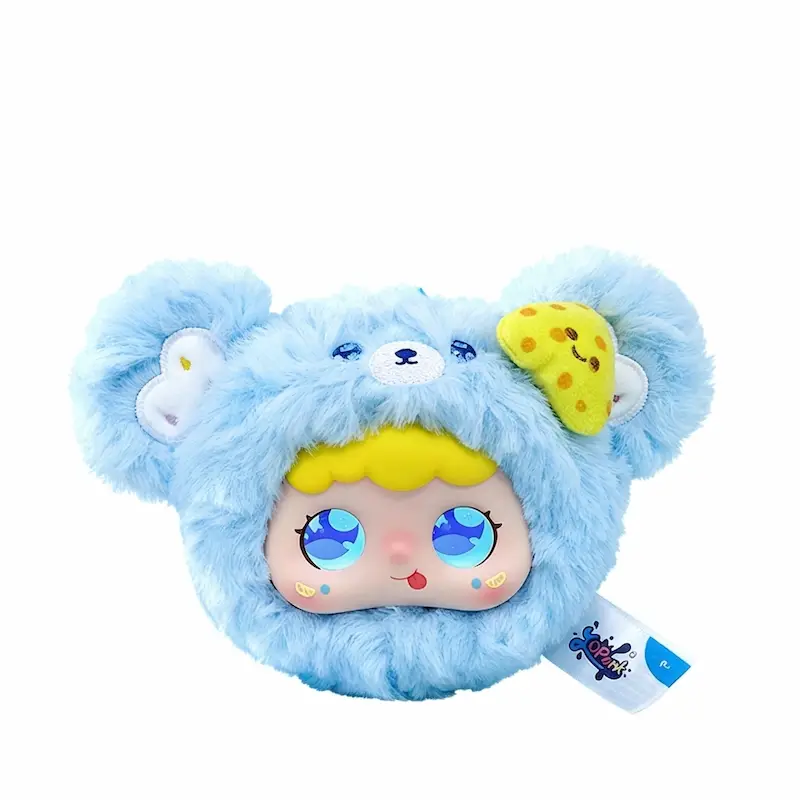
The AI children’s plush toys range covers the first two slots, and the AI interactive plush toy carries the multilingual build that sells into Europe. A pendant or charm format reaches a different buyer, the one buying for a teenager rather than a toddler, and the smart plush pendant sits in that gap.
Where the range also includes a robot, our AI robot dog sourcing guide covers the servo side. The two categories share a supplier base but almost none of the testing.
Form factor is where a first range usually goes thin. The plush crossbody bag toy and the AI plush backpack charm occupy a different shelf from a sitting plush and answer a lower price point without a new mould, while a lucky cat AI plush holds the counter-display and gift position that most plush ranges miss entirely.
Where buyers get this wrong
The first mistake is approving the sample on a phone call. A plush toy has to be held, squeezed, and listened to in a quiet room before the mould is signed off.
The second is buying the fabric and the electronics from two suppliers who never speak. The pod has to fit the opening, and the opening is cut before the electronics are finalised.
The third is assuming the language list is free. Each language is a model, a voice pack, and a review of the content filter. A 12-language toy costs more to build than a 3-language one, and the gap is not in the plastic.
Frequently asked questions
What is a realistic MOQ for a custom AI plush toy?
Stock shapes usually start at 500 units. A new pattern, a new fabric, or a printed logo moves the floor to 1,000 units, because the cutting die is charged per run.
How long does production take?
Stock shapes ship 20 to 25 days after deposit and sample approval. A new pattern adds 15 days, and a new voice pack adds about 7 days on top of that.
Which certifications does an AI plush toy need?
EN 71 parts 1 to 3 plus the CE mark for the EU, ASTM F963 and a Children’s Product Certificate for the US, and UN 38.3 if the toy ships by air with a lithium cell.
Can the plush be machine-washable?
Yes, with a removable electronic pod. The pod has to be sealed to IPX4 and the connector rated for at least 50 insertions, or the toy fails after the third wash.
Is a cloud voice assistant allowed in a children’s toy?
It is allowed, with obligations. The recording is personal data, so the retention period, the deletion route, and the parental notice all have to be documented before the retailer lists it.
What failure rate should I expect on arrival?
Under 2% dead on arrival at 500 units is realistic. Above 5% in a sample of 20 usually points to a battery contact or a firmware flash problem.
Next step
Send the age band, the size in centimetres, the language list, and the target retail price. TuoyangAI is the trading name of Shenzhen Longgang District Tuoyang International Trade Firm, a sourcing partner in Shenzhen working with plush and electronics factories rather than owning one.
A short brief gets you a costed comparison across two builds, with the packaging and the freight estimate included. Start with the AI plush toy range if you need specifications, or send the brief straight to the contact page and we will come back with the two options that fit.
Tell us what you are building. Send the spec, the market and the volume. A sourcing engineer reads every message, and the quote comes back with the certification list attached.